 GO TO DONIZETTI OPERA
 GO TO BERGAMO JAZZ
HISTORY LESSONS 2026
Cultural capitals
Second meeting:
Venice and the dawn of books
with Alexander March the Great
Saturday, January 17, 2026 at the Donizetti Theatre
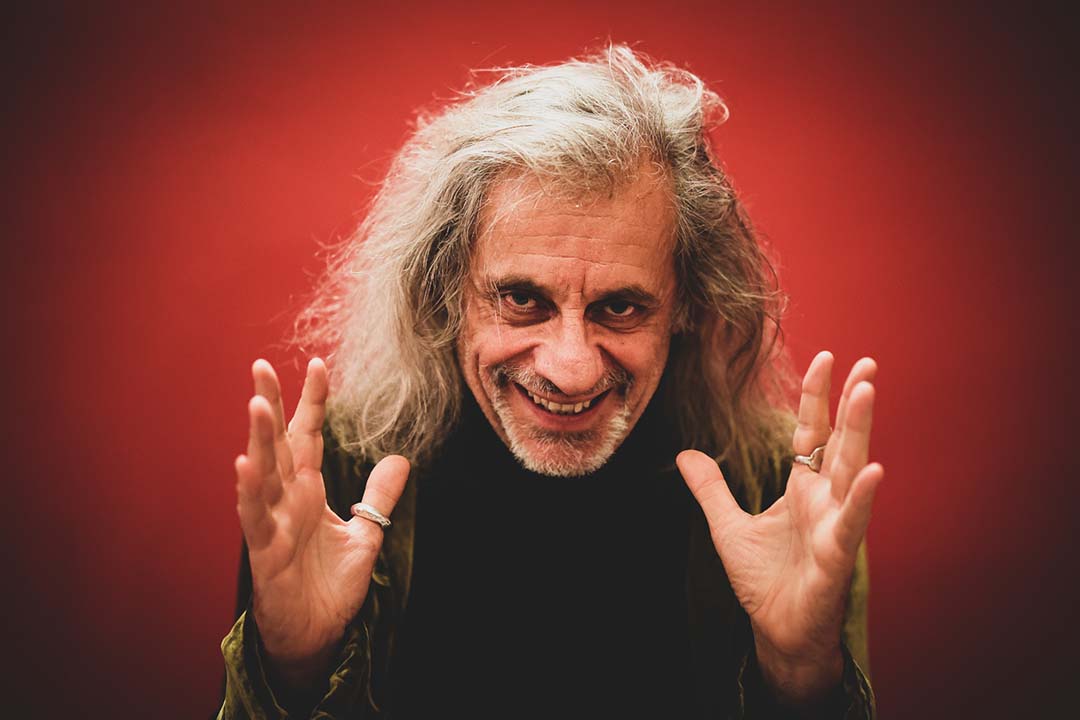
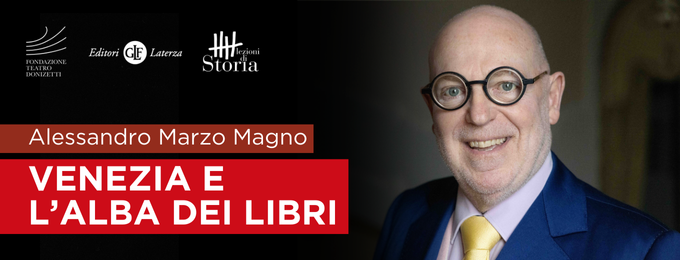
Launched with great success – 1,190 attendees – by Laura Pepe and her Athens of Pericles, the journey through the Cultural Capitals of the third edition of the Lessons in History, an event organized by the Donizetti Theater Foundation in collaboration with Editori Laterza and with the support of BCC Oglio e Serio, now makes a stop in Venice, a city that in the midst of campi, campielli and calli was the cradle of publishing: on Saturday, January 17 (11 a.m.) at the Donizetti Theater, journalist, historian and writer Alessandro Marzo Magno will speak about it.
Although it was invented in Germany, movable type printing developed in Italy, particularly in Venice precisely, which in the 16th century became the undisputed capital of publishing. Half of the European editions and three-quarters of the Italian ones were published in Venice: the first Greek book in history, the first Armenian book, the first Bible in the Italian vernacular, the first Talmud, the first Koran in Arabic, the first illustrated medical book and the first pornographic book were printed in the lagoon.
Alessandro Marzo Magno, Venetian by birth and Milanese by work, graduated in history from the University of Venice “Ca’ Foscari.” His dissertation James Pattison, Venetian artillery and artillerymen in the 18th century was awarded in 1990 by the Italian Society of Military History. A journalist, after being the foreign editor of the weekly “Diario” for almost ten years, he collaborates with “Il Gazzettino.” He has written books on historical subjects, some of which have been translated into many languages. For Laterza he is the author of. The splendid. Venice 1499-1509 (2019), The inventor of books. Aldo Manuzio, Venice and his time (2020), Venice. A history of sea and land (2022), Casanova (2023) and History of Venice in Ten Naval Battles (2025).
History Lessons will continue on January 24 with Alessandra Bucossi who will address the topic. Constantinople, the New Rome, where the first city stands for the emblem of cosmopolitanism, unparalleled witness to the cultural transfers between East and West that are at the origin of the Byzantine world. Rome, city of the gods will instead be the focus of the Feb. 7 meeting with Maurizio Bettini: a still “pagan” Rome, creator of unprecedented religious suggestions mediated by the customs of the Italic peoples and the Greek tradition. Finally, on Feb. 14, the spotlight will be on. St. Petersburg and the avant-garde, with Paolo Nori who will go back with memory and words to the St. Petersburg of the October Revolution: a hotbed of novelty, an unrepeatable ferment that, in the mingling of the new socialist ideology and the artistic avant-gardes, will radiate throughout Europe.
All meetings will begin at 11 a.m. and will be introduced by journalist Max Pavan, Bergamo TV news director.
At the end of each meeting, the authors will stop with the audience for a firmacopie at the Theater’s Ridotto Gavazzeni.