 GO TO DONIZETTI OPERA
 GO TO BERGAMO JAZZ
Prose Season 2025-2026
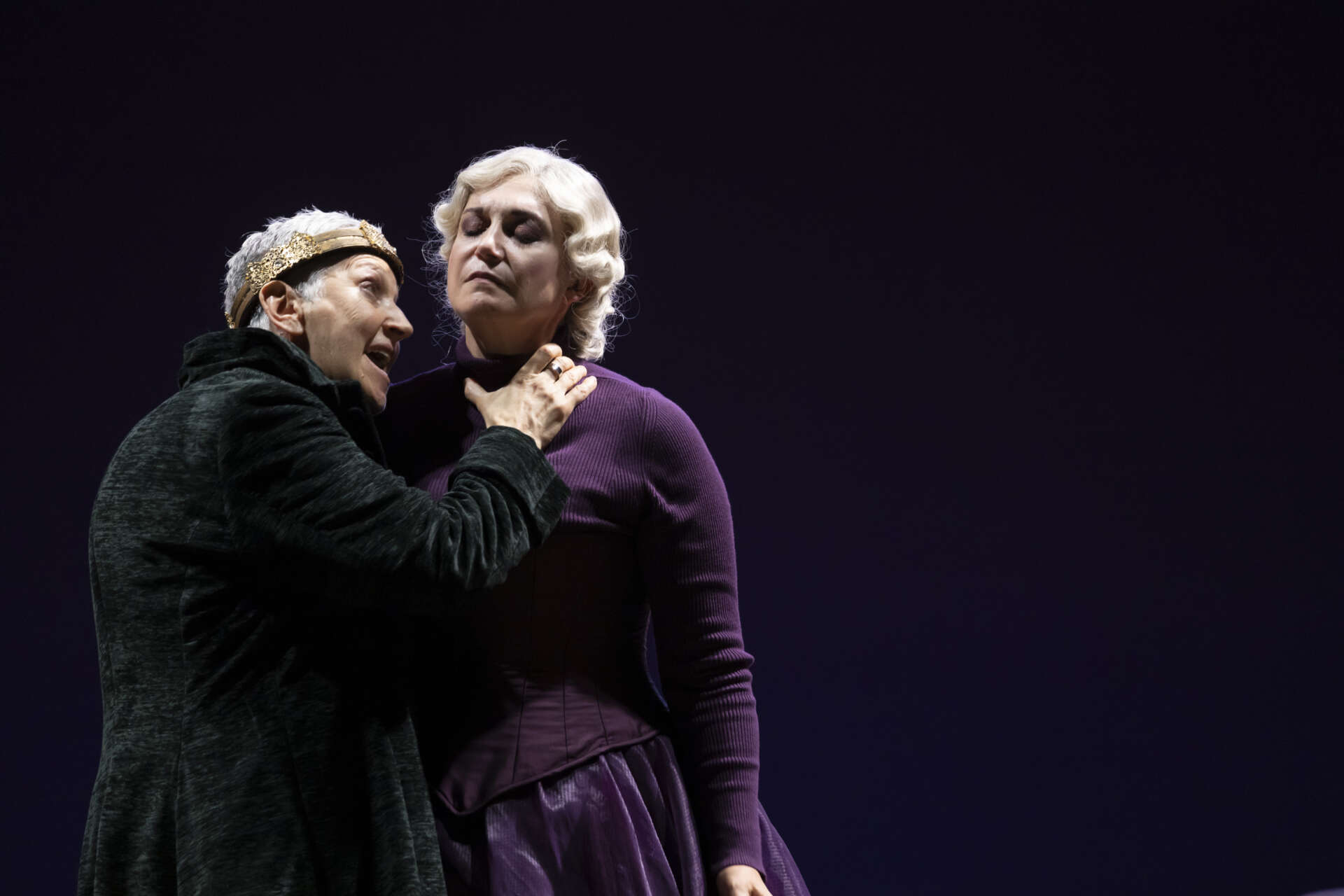
Richard III
by William Shakesperare
with Maria Paiato
May 9 to 17 at the Donizetti Theatre
The Prose Season 2025-2026 of the Donizetti Theater Foundation concludes in the sign of Shakespeare: in fact, from Saturday, May 9 to Sunday, May 17, Riccardo III, an absolute masterpiece of Shakespearean theater, is scheduled in the main city theater. Bringing it to the stage will be Maria Paiato, in the role of the protagonist, along with a large group of actors: Riccardo Bocci, Tommaso Cardarelli, Francesca Ciocchetti, Ludovica D’Auria, Giovanna Di Rauso, Giovanni Franzoni, Igor Horvat, Emiliano Masala, Cristiano Moioli, Lorenzo Vio, Carlotta Viscovo. Directed by Andrea Chiodi.
A meeting with Maria Paiato and company around the show is scheduled for Thursday, May 14, 2026, at the Music Room of the Donizetti Theater at 6 p.m. Coordinated by Maria Grazia Panigada, Artistic Director of the Prose Season and Other Paths.
All the talent and extraordinary strength of Maria Paiato meet Shakespeare’s Richard III . A project strongly desired by the Venetian actress herself, which has come to life thanks to the understanding with director Andrea Chiodi: a correspondence in the look at the text that wants Paiato in the role of King Richard the usurper, the evil genius, the kind of cruel, Machiavellian politician, repeatedly targeted by Elizabethan theater. His is an interpretation of the male role that aims to restore a Shakespeare faithful to the original.
“Now is the winter of our discontent become glorious summer under this sun of York”: this is how the Bard’s tragedy, among his most famous plays, opens, divided into five acts, recounting the rise to the throne and sudden fall of the wicked Richard, Duke of Gloucester. It is the last of the four plays in Shakespeare’s minor tetralogy and concludes the dramatic tale of English history that began with Henry IV Part I. William Shakespeare wrote it around 1592, dramatizing the historical events that occurred about a century earlier when, at the end of the War of the Roses, Plantagenet power in England was replaced by the Tudor dynasty. These events, culminating in Richard’s defeat at the Battle of Bosworth Field in 1485, were well known to all Englishmen of Shakespeare’s time, and the audience identified with the political factions depicted on stage. At the center of the play is the figure of Richard: in a deformed physique, he packs an indomitable negative force, and his fidelity to his destiny arouses, despite the character’s cruelty, an undeniable fascination.
In his director’s notes Andrea Chiodi writes: “Fascinating, ironic, seductive, yet frighteningly lucid, Richard is the manifestation of an anomaly of the soul. When Maria Paiato asked me to work together on Richard III, I immediately said yes, but with the desire not to dwell on the deformity but on the head and heart of the character that Shakespeare’s skilful writing gives us back: it is not his disability that interests me but his irony in his ability to seduce. Evil has always seduced and indeed we are surrounded by it. Perhaps that it is interesting to understand how to unearth it, how to find out where this evil is holed up to fight it? Is it perhaps originated from our childhood? Did Richard play as a child? Was he loved? Here, I started from these questions to wonder about evil and the thirst for power, so wearisome and useless, indeed bringing only death and division. By delving into Shakespeare’s words, an attempt was made to explore, as always, the human soul and its standing before the mystery that is man and his terrible thirst for power, when nothing else fulfills or completes it.”