 GO TO DONIZETTI OPERA
 GO TO BERGAMO JAZZ
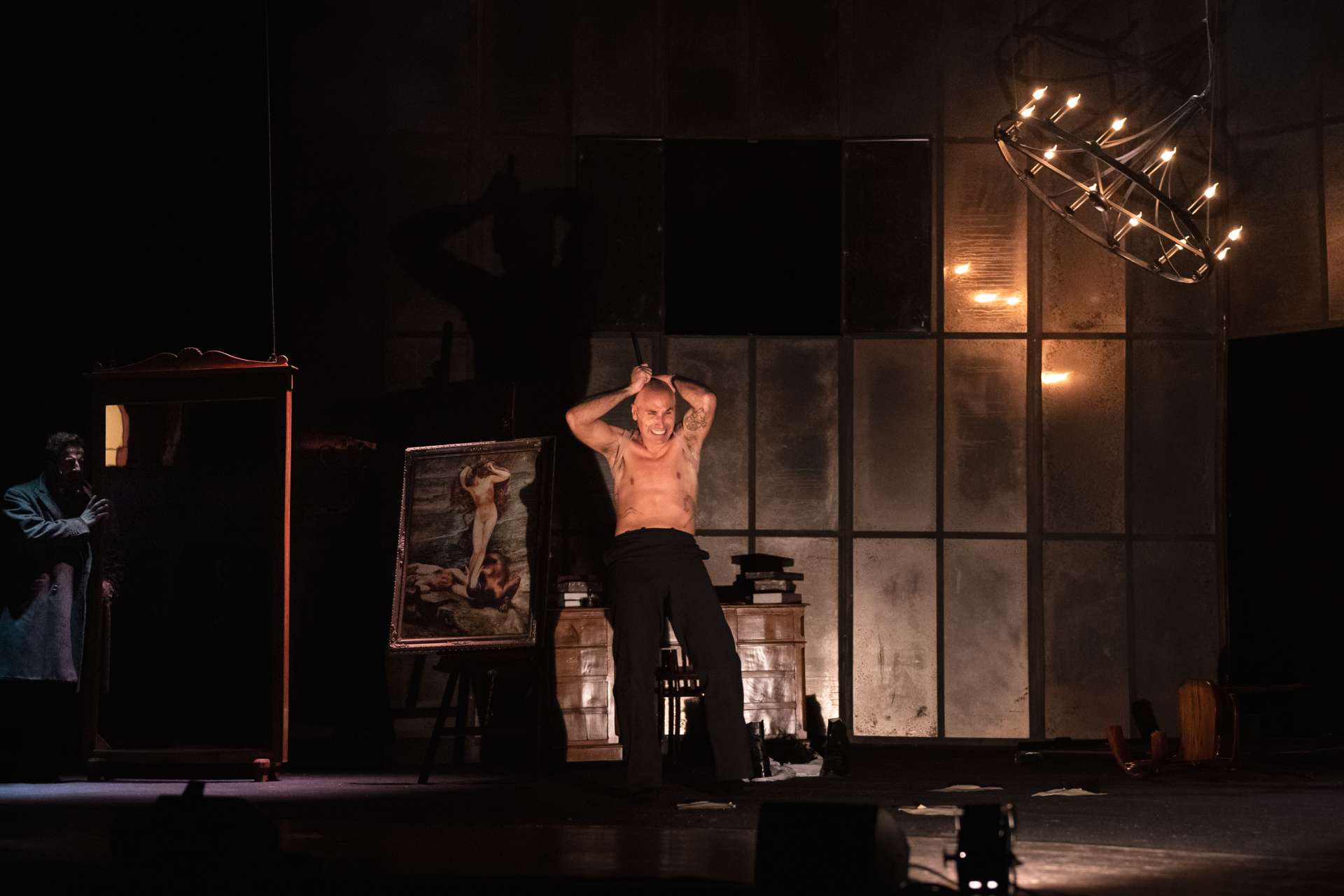
The Jekyll Case
with Daniele Russo
directed by Sergio Rubini
February 21 to March 1 at the Donizetti Theatre
The Donizetti Theatre Foundation’s Prose Season 2025-2026 continues with a title that evokes a famous novel that explores the dualism between good and evil, Robert Louis Stevenson’s The Strange Case of Dr. Jekyll and Mr. Hyde, of which there are countless adaptations for film, television and theater. And a man of cinema and theater, but also television, such as Sergio Rubini signs the direction, as well as the adaptation of the original text together with Carla Cavalluzzi, of The Jekyll Case, scheduled at the Donizetti from Saturday, Feb. 21 to Sunday, March 1 (Monday, Feb. 23, rest). In the title role will be Daniele Russo, with Geno Diana and Pierluigi Corallo and with Sergio Del Prete, Angelo Zampieri and Alessia Santalucia. Sets by Gregorio Botta. Costumes by Chiara Aversano. Lighting design by Salvatore Palladino. Sound design by Alessio Foglia. Production Fondazione Teatro di Napoli – Teatro Bellini, Marche Teatro and Teatro Stabile di Bolzano. Duration 2 hours without intermission. Showtimes: 8:30 p.m., Sunday, Feb. 22 and March 1, 3:30 p.m. Ticket prices: from 15 to 45 euros, reduced from 12 to 36 euros.
Sergio Rubini presents the idea of the show in his director’s notes as follows: “Starting from the consideration that Stevenson’s famous novel The Strange Case of Dr. Jekyll and Mr. Jekyll. Hyde is an apologia on the human condition having as its central theme the double, which then is the double that dwells in each one of us, we developed a dramaturgy that had a more clearly psychoanalytic key, closer to those theories that developed almost half a century after the publication of Stevenson’s tale, and that had the greatest expression in the scientific landings first of Freud, then of Jung. Our text, in fact, stripped of any allegorical solution used by Stevenson and which gives the fantastic character to the whole story, chief among them the metamorphosis of Jekyll into Hyde through a chemical experiment, the so-called “potion,” is rather a journey into the unconscious in this case of a famous medical luminary, Henry Jekyll, who aspiring to the identification of what are the causes of mental illness, makes himself a guinea pig and then becomes a victim of his own theories, pulling out of the cave of the conscious what is hidden to him, his shadow, his Hyde.”
“It is clear from this that the story from which we started is in fact only inspiring a story closer to the issues of our contemporary times that offers the viewer the opportunity not only to mirror himself in what are the dangers but also the pleasures that spring from his own shadow, but also to be a food for thought on the need to dialogue with one’s unconscious, to bring it out and share it with the community despite society’s tendency to repress everything outside the canon that often coincides instead with the authentic, to prevent our shadow from solitarily digging a tunnel in our selves of suffering and violence,” Rubini continued.