 GO TO DONIZETTI OPERA
 GO TO BERGAMO JAZZ
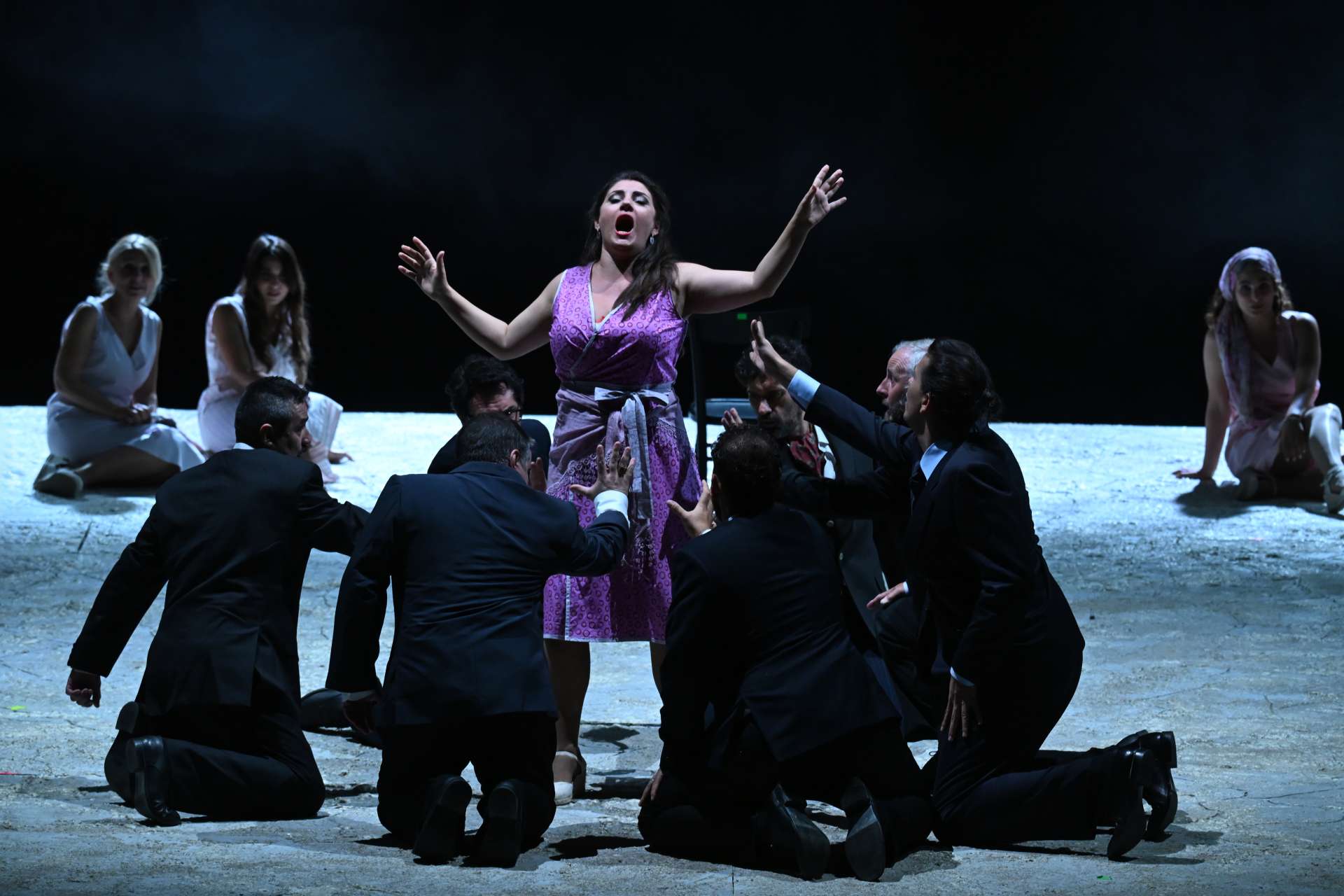
Concluding the Opera&Concerts section of the 2025-2026 Theater Season of the Donizetti Theater Foundation goes on stage on Friday, January 30 at 8 p.m. and Sunday, February 1 at 3:30 p.m., one of the absolute most beloved operatic titles by the general public: Carmen. Georges Bizet’s masterpiece will be staged in the new production by the OperaLombardia Theaters (Grande di Brescia, Ponchielli di Cremona, Fraschini di Pavia, Sociale di Como, Donizetti di Bergamo), produced on the occasion of the 150th anniversary of the first performance, in co-production with the Teatro Comunale “Pavarotti-Freni” in Modena, the Teatro Municipale di Piacenza, and the Teatro “Dante Alighieri” in Ravenna. Directed by Stefano Vizioli, with musical direction by Sergio Alapont, a specialist in the French repertoire on the occasion conducting the Orchestra I Pomeriggi Musicali, sets by Emanuele Sinisi, costumes by Annamaria Heinreich and lighting by Vincenzo Raponi, this new edition of Carmen boasts a first-rate artistic cast. Emanuela Pascu and Emilia Rukavina will alternate in the title role, while Roberto Aronica will take on the role of Don José, sharing it with tenor Joseph Dahdah. Rocio Faus and Alessia Merepeza will take turns bringing to life the character of Micaëla, and Gianluca Failla will be Escamillo. Completing the cast are the voices of Aoxue Zhu (Mercédès), Soraya Mencid (Frasquita), Paolo Ingrasciotta (Moralès), Nicola Ciancio (Zuniga), William Allione (Dancairo) and Enrico Iviglia (Remendado). OperaLombardia Chorus conducted by Diego Maccagnola. Children’s voice choir I Piccoli Musici directed by Mario Mora.
The opera will be sung in the original language with Italian surtitles.
On Thursday, Jan. 29 at 6 p.m., at the “M. Tremaglia” Music Room of the Donizetti Theater,
the two performances will be preceded by a meeting entitled:
Danger No. 1: the Woman! Obsessions and possessions of a male in Bizet’s Carmen.
Speakers: Paolo Fabbri and Livio Aragona of the Donizetti Studies Center of the Donizetti Theater Foundation.
Iconographic selection by Clelia Epis and Maurizio Merisio.
Free admission with reservations on Eventbrite
Represented on stages all over the world and whose arias are instantly recognizable by melomaniacs and novices alike – think of L’amour est un oiseau rebelle (Habanera) – Carmen is a symbolic opera about the quest for the freedom to love, a plastic depiction of the gender violence that results from overwhelming passion. The opera was initially under-appreciated and found fortune only after the death of its composer: its Paris premiere debut on March 3, 1875 at the Opéra-Comique, did not, in fact, meet with public approval, scandalized by the scabrous tale told, but after a few months in Vienna-unfortunately after its author had passed away prematurely-it finally found the success that made it immortal in the history of music.
For Stefano Vizioli, the one at the Teatri di OperaLombardia is his first Carmen as director: “Although I often played it when I was accompanist on the piano, I have never entered, even as assistant director, into the scenic dynamics of such a complex score. So I personally experience a reunion with an old friend, and at the same time panic before an unsolved mystery dense with anxieties. I started from the so-called “Theme of Destiny,” the only real leitmotif that accompanies the score, and on that, together with set designer Emanuele Sinisi, costume designer Annamaria Heinreich, and with the contribution of videos by the Imaginarium group, I opted for a certain spoliation from a pseudo-Spanish setting. One will see on stage a sloping platform enclosed by walls corrupted by time, on which acts a large central wall that, depending on the scenic and emotional situations, will reveal spaces “other” than oneself, the world of freedom, of desire, of going beyond the conventions that society forces us to follow for fear of the destabilization caused by an “other,” different and unknown universe.”
For conductor Sergio Alapont, “one of the most extraordinary aspects of Carmen is its musical variety: the opera is studded with unforgettable melodies, recurring motifs, and has orchestral writing that ranges from lyrical to dramatic. The score is composed of an extraordinary fusion of genres, including elements of Spanish folk music, bel canto, and melodrama. Although Carmen predates the official birth of operatic verismo in Italy by about two decades, many of its features anticipate this current. Musically and dramaturgically, Bizet’s opera moves away from idealized romanticism and leans more toward a realistic and stark depiction of life. Bizet incorporates rhythms and melodies inspired by Spanish folklore (the Habanera originating in Cuba, or the Andalusian Seguidilla) into the score not as mere exoticism, but to authentically characterize the characters. The orchestral color does not idealize, but restores the warmth and sensuality of real Spain.”